Application guidance for using tannase in polyphenol-rich fruit juices and concentrates to reduce tannin-driven haze, sediment, astringency, and processing variability.
Request pricingTannin-rich fruits can deliver color, structure, and antioxidant positioning. They can also bring persistent haze, sediment, bitterness, and mouth-drying astringency that complicate premium juice and concentrate production.
Tannase is designed for processors working with grape, pomegranate, berry, persimmon, apple, tropical fruit blends, botanical infusions, and other polyphenol-heavy systems where tannins interfere with clarity, flavor balance, filtration, and finished-product consistency. Pectin haze in apple juice and cider is handled by a different enzyme, covered on a Japanese-language application page about pectinase for cider.
By hydrolyzing galloyl ester bonds in hydrolysable tannins and related polyphenol complexes, tannase helps convert difficult tannin behavior into a more controlled clarification and flavor-refinement step, and Tannase Enzyme Solutions supplies it in bulk to juice and concentrate processors on a quote-per-order basis.
Bulk tannase for juice and concentrate plants. Request a quote through the inquiry form: send the fruit system, the quantity you need and the delivery country.
In juice and concentrate operations, tannins rarely appear as a single issue. They interact with proteins, polysaccharides, minerals, pigments, and processing aids, creating variable behavior from lot to lot.
Common pain points include:
Tannase is not a replacement for disciplined fruit handling or clarification design. It is a targeted enzymatic tool for reducing tannin-driven instability before it becomes a downstream yield and quality problem.
Tannase, also known as tannin acyl hydrolase, acts on specific ester-linked tannin structures. In practical juice processing, that can support:
The goal is not to remove all polyphenol identity. For premium juices, that would be the wrong target. The goal is to refine the unstable and harsh fraction while preserving the fruit’s color, body, and varietal signature.
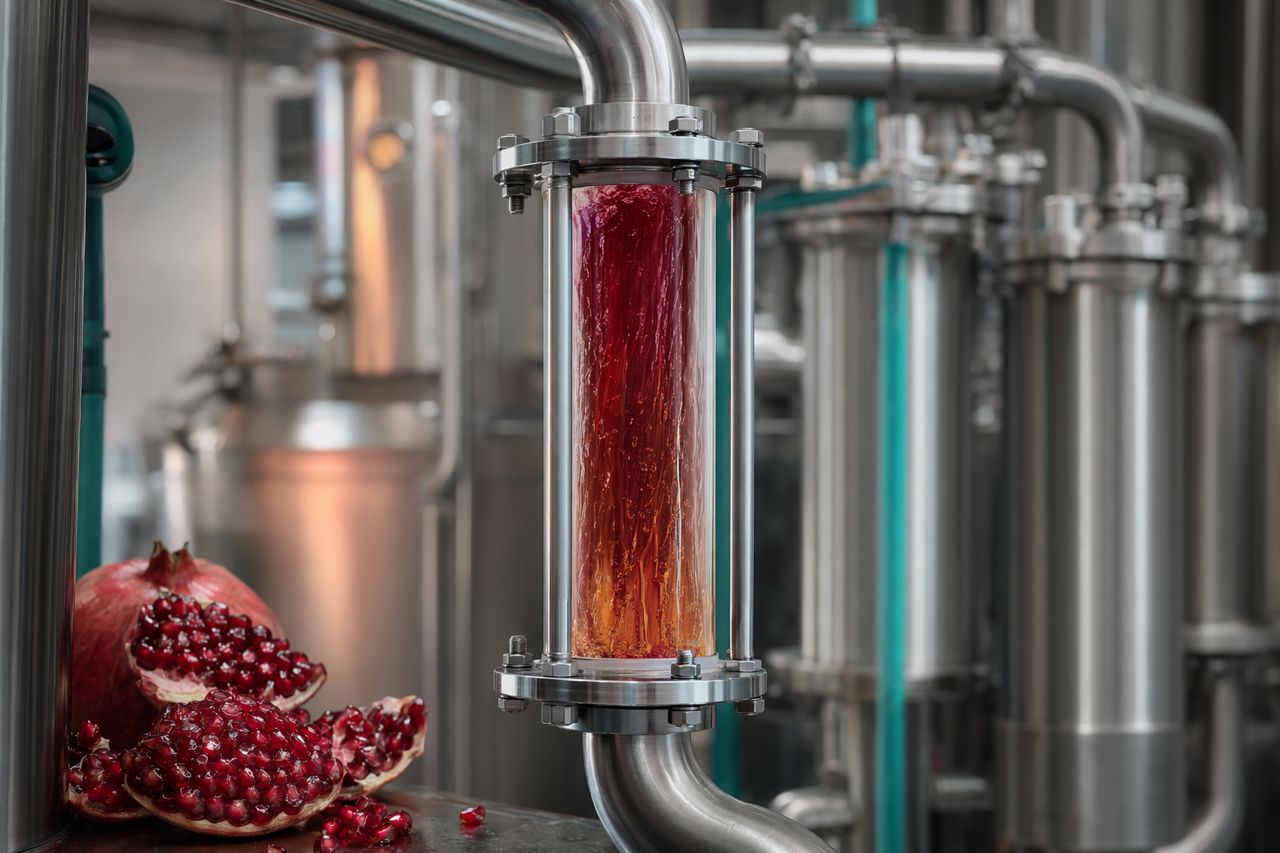
Pomegranate is naturally rich in hydrolysable tannins and can show heavy sediment formation, bitterness, and filtration resistance. Tannase can help reduce harsh tannic edges and improve clarification behavior while maintaining the dense, premium sensory profile expected from pomegranate products.
Red grape, aronia, elderberry, cranberry, blueberry, blackberry, and mixed berry bases can carry high polyphenol loads. Tannase supports haze control, mouthfeel refinement, and processing consistency in still juices, concentrates, fermented bases, and beverage compounds.
Persimmon and similar fruits can present intense astringency from reactive tannins. Tannase can be evaluated as part of a broader debittering and clarification strategy, especially when the objective is to keep fruit identity while reducing drying mouthfeel.
When juice processors also handle tea-fruit blends, botanical infusions, or polyphenol-rich extracts, tannase can help create more stable beverage bases with cleaner flavor release and less post-blend precipitation.
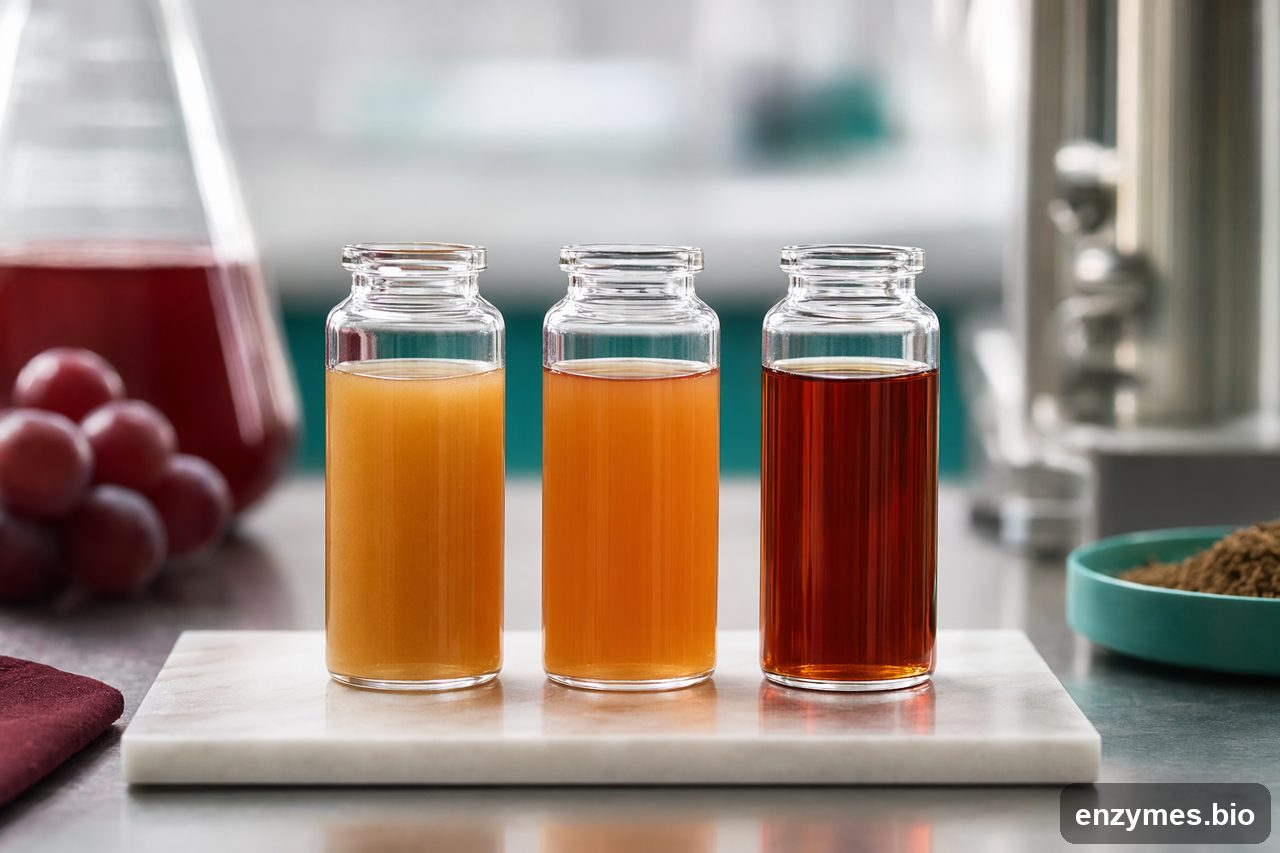
Tannase is typically evaluated where tannin structures are accessible and before the main clarification burden reaches filtration or polishing.
Common integration points include:
For best results, evaluate tannase under your real matrix conditions: fruit variety, maturity, soluble solids, acidity, solids load, thermal history, and target clarity. Tannin behavior is matrix-specific, so a small pilot screen is the right starting point.
Use tannase as part of a controlled trial plan rather than a one-step correction. Key variables to review include:
Tannase can be paired with other clarification enzymes when pectin, cell wall fragments, or protein interactions are also limiting process flow. The right sequence depends on whether haze is primarily tannin-driven, pectin-driven, protein-driven, or mixed.
A useful tannase pilot should compare untreated control, process control, and tannase-treated samples using the same fruit lot.
Recommended evaluation points:
The strongest trials connect processing metrics with sensory outcomes. A juice that filters faster but loses character is not a success. A juice that stays stable, tastes cleaner, and protects yield is.
Tannase can support measurable operational and product-quality gains:
For B2B teams, the benefit is not only clearer juice. It is more predictable manufacturing: better flow, cleaner flavor architecture, and fewer surprises between pilot, scale-up, and shipment.
Tell us what fruit system you are processing, where haze or astringency appears, and what clarification train you use today. Tannase Enzyme Solutions will help you scope the right evaluation path for tannase in your process.
Tell us your application and volume — we reply with pricing and lead time.
We have received your message. We will reply by email.