Bulk and wholesale tannase for manufacturers, distributors and resellers in tea, juice, wine, botanical extract, gallic acid and fermentation processing. Request a quote by product, quantity and destination.
Request pricingTannase Enzyme Solutions supplies tannase in bulk to manufacturers, distributors and resellers that work with tannin-rich materials: tea and ready-to-drink beverage plants, juice and wine processors, botanical extract and gallic acid producers, and fermentation and ingredient companies. Supply is quote-only: tell us the product or application, the quantity and the delivery destination, and we reply with a matching grade, pack options and a price for your order.
Tannase (Tannin Acyl Hydrolase) acts on ester-linked tannin structures, helping shift difficult polyphenol matrices toward better clarity, softer astringency, improved filtration, and more consistent extraction outcomes.
Wholesale and bulk tannase supply. Request a quote through the inquiry form: send the product or application, the quantity (trial, pilot or production volume) and the delivery country. Pack sizes, lead time and price are quoted per order.
Tannin-rich materials bring sensory depth and functional value, but they also create processing friction. Tannase is used when the goal is to manage that friction without stripping the character of the raw material.
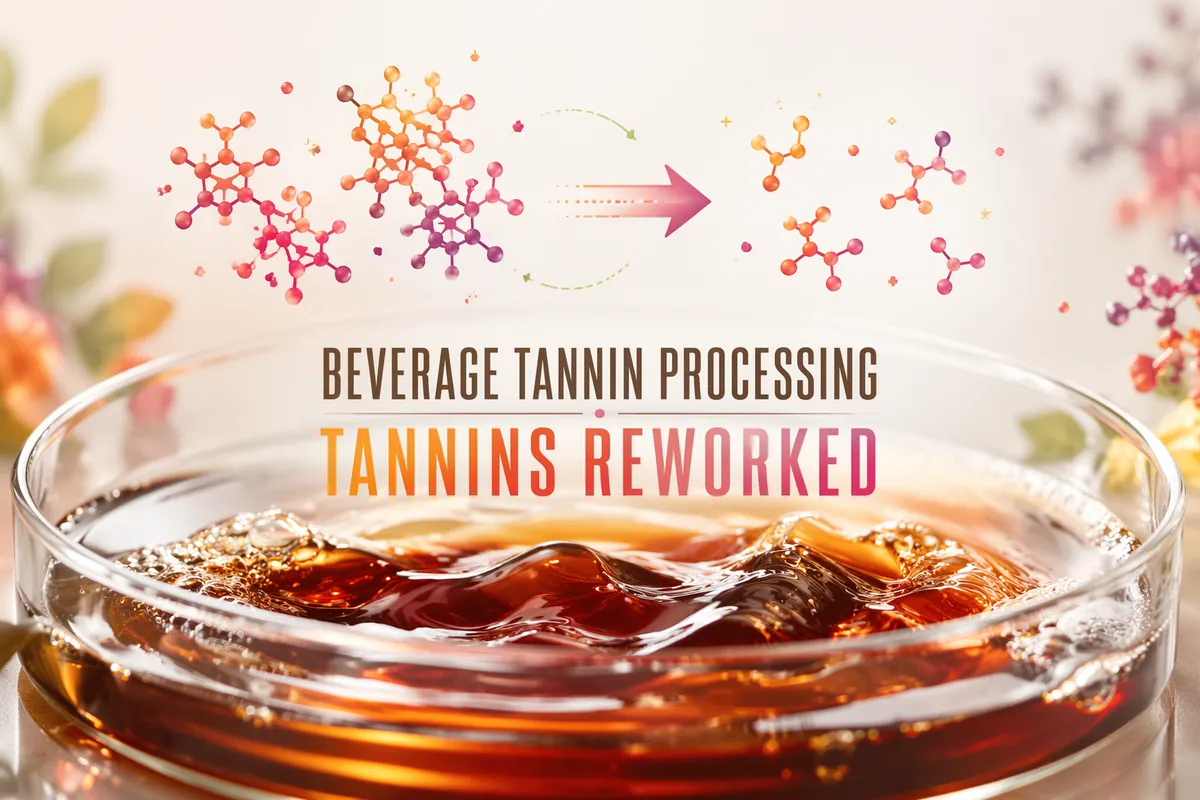
Tea systems can carry heavy tannin load, especially in concentrated extracts and RTD formats. Tannase can support smoother taste, reduced cream formation, improved cold stability, and more predictable appearance after blending, sweetening, acidification, or thermal processing.
Best-fit use cases include black tea concentrates, instant tea bases, functional infusions, kombucha inputs, and botanical tea blends where tannic roughness limits consumer acceptance.
In tannin-forward beverage systems, tannase may be used to adjust bitterness, astringency, clarification behavior, and phenolic balance. It is most valuable when the target is controlled refinement rather than aggressive stripping.
Typical evaluation points include mouthfeel, post-processing haze, filtration time, color impact, aroma retention, and compatibility with fining or stabilization steps.
Many botanical extracts contain gallotannins, ellagitannins, and related polyphenol complexes that complicate solubility, taste, and downstream standardization. Tannase can help convert selected tannin structures, improve extract handling, and support cleaner specialty ingredient positioning.
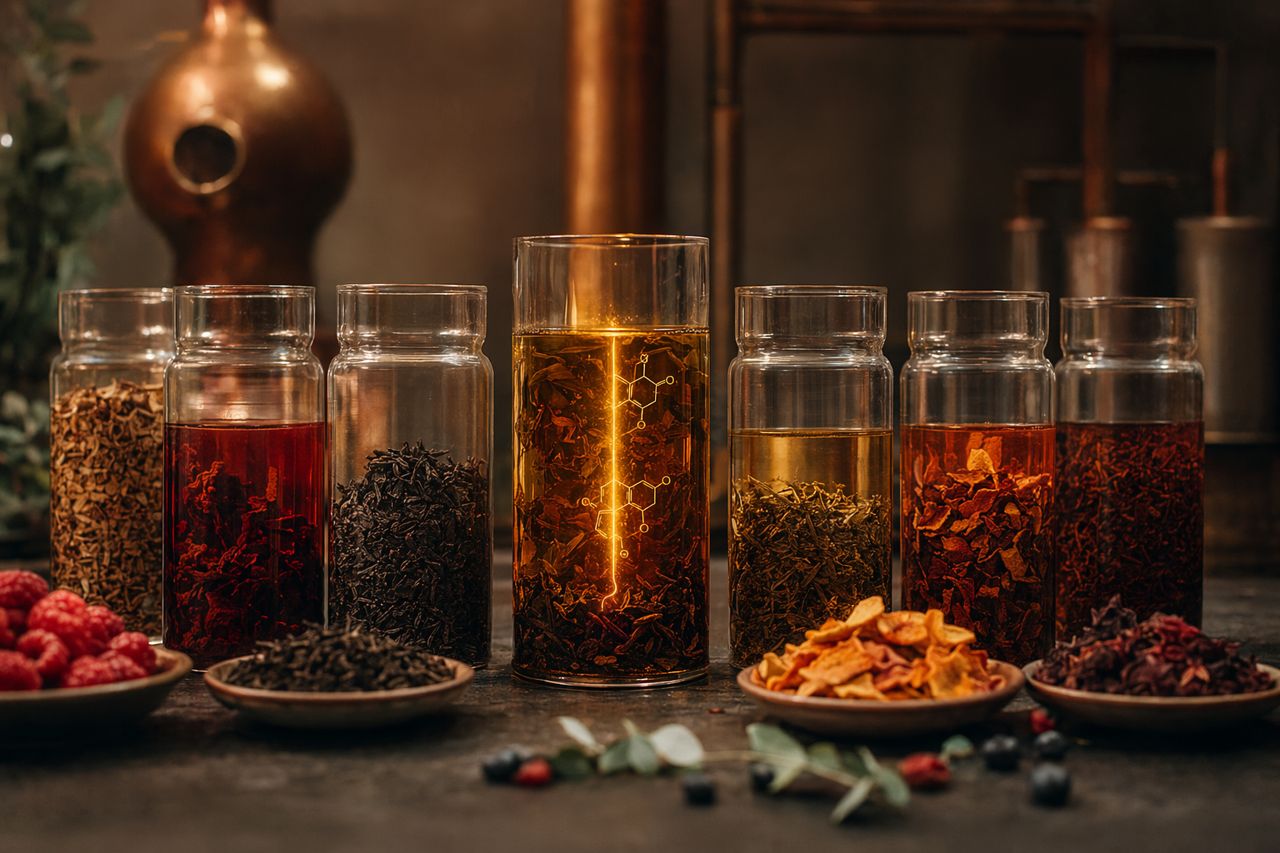
Common matrices include gallnut-derived extracts, herbal extracts, fruit peel extracts, seed and bark extracts, and polyphenol-rich fermentation substrates.
Roasted and fermented plant materials can contain tannin-derived bitterness and complex phenolic interactions. Tannase may be evaluated for smoother flavor profiles, better extract performance, and cleaner beverage bases where high solids or high polyphenol load create sensory limits.
Tannase can be integrated before, during, or after fermentation depending on the organism, substrate, sensory target, and heat-kill plan. It is often explored to improve phenolic accessibility, reduce inhibitory tannin effects, or create gallic-acid-rich ingredient profiles.
Tannase hydrolyzes ester bonds in hydrolyzable tannins. In practice, this can reduce the size and binding behavior of tannin complexes and generate smaller phenolic components such as gallic acid, depending on the substrate.
For a processing team, the important question is not only whether tannase reacts. It is where the reaction should stop.
A good tannase program defines:
Tannase can be evaluated during extraction, after extraction, before clarification, before concentration, or as part of a controlled finishing step. The right point depends on whether the priority is flavor, yield, haze control, or conversion of a specific tannin fraction.
High solids, alcohol, sugars, acids, proteins, minerals, and other polyphenols can all influence performance. Pilot testing should be run in the real process matrix whenever possible, not only in water or buffer.
Longer reaction is not automatically better. Over-processing can change body, color, phenolic balance, or the intended premium character of the product. Tannase Enzyme Solutions recommends defining a sensory and analytical endpoint before scale-up.
Most commercial processes use downstream heat, pH shift, separation, or a validated finishing step to stop or limit enzyme action. The stop strategy should be designed around the product format and regulatory pathway.
Tannase may be paired with filtration aids, fining systems, pectinase, cellulase, hemicellulase, protease, or fermentation organisms, but sequencing matters. Interaction testing is essential when clarity, aroma, or mouthfeel are commercial specifications.
A quote is fastest when the inquiry states the product or application, the quantity you need and the delivery destination. These details then let us match the grade to your process:
With those answers we can quote a grade, pack option and price for your volume, and plan a trial quantity where you want to test before a production order.
Tannase Enzyme Solutions supplies businesses, not individual consumers:
Tell us the product or application, the quantity you need and the delivery destination, plus the matrix and process goal. We reply with the matching tannase grade, pack options, documentation and a quotation. The quickest route is the inquiry form at the bottom of this page.
Tannase is not a commodity checkbox when the product depends on tannin behavior. It is a precision processing tool for flavor, clarity, yield, and control. Tannase Enzyme Solutions keeps the conversation focused on what matters in production: the matrix, the endpoint, the economics, and the quality documentation behind the enzyme.
Buying for a plant or for resale? Send product, quantity and destination through the inquiry form; every order is quoted individually.
Tell us your application and volume — we reply with pricing and lead time.
We have received your message. We will reply by email.